

THE YAB MILESTONE GUIDE
INTRO & SUMMARY
This document, created by Lauren Leonardis at Rind and Reason Consulting LLC on behalf of the National Homelessness Law Center (NHLC), is an overview of the YAB Milestone Guide & Marker Tool; a resource developed to support communities in the development of Youth Leadership & a Youth Action Board (YAB) that is sustainable, supportive, and effective. YABs consist of youth and young adults who have experienced homelessness and housing instability, their purpose is to create opportunities for young people to participate in the shaping of programs and policies in their local communities, and to support the development of youth leadership.
NHLC is highly dedicated to ensuring young people are being supported, compensated, and uplifted appropriately and legally. They previously created a Youth Compensation Legal Guide with a ton of other relevant and helpful information.
If you have questions, comments, or just want to shout “hooray, thank you!” Please email me, Lauren, at LeonardisLauren@gmail.com - I would love to hear from you!
If you haven’t already, pop over to this page about choosing the appropriate compensation model to find more resources & LEARN ABOUT YAB COMPENSATION HISTORY: Choosing an Appropriate Compensation Model
MILESTONE GUIDE & MARKER OVERVIEW
The YAB Milestone Guide & Marker tool was created to help communities identify what milestones to work towards to create a sustainable, effective, and impactful YAB. It lives in a google doc spreadsheet and consists of two tabs, the “guide” and the “marker.”
The Guide tab contains a full, detailed description of 17 different YAB milestones, and what progress towards meeting the best practice can look like. Descriptions are sorted from “best practice met” to “needed” to help communities understand what to look for when identifying where their own gaps may be.
The Marker tab contains a tool for communities to keep track of progress and areas of improvement still needed.
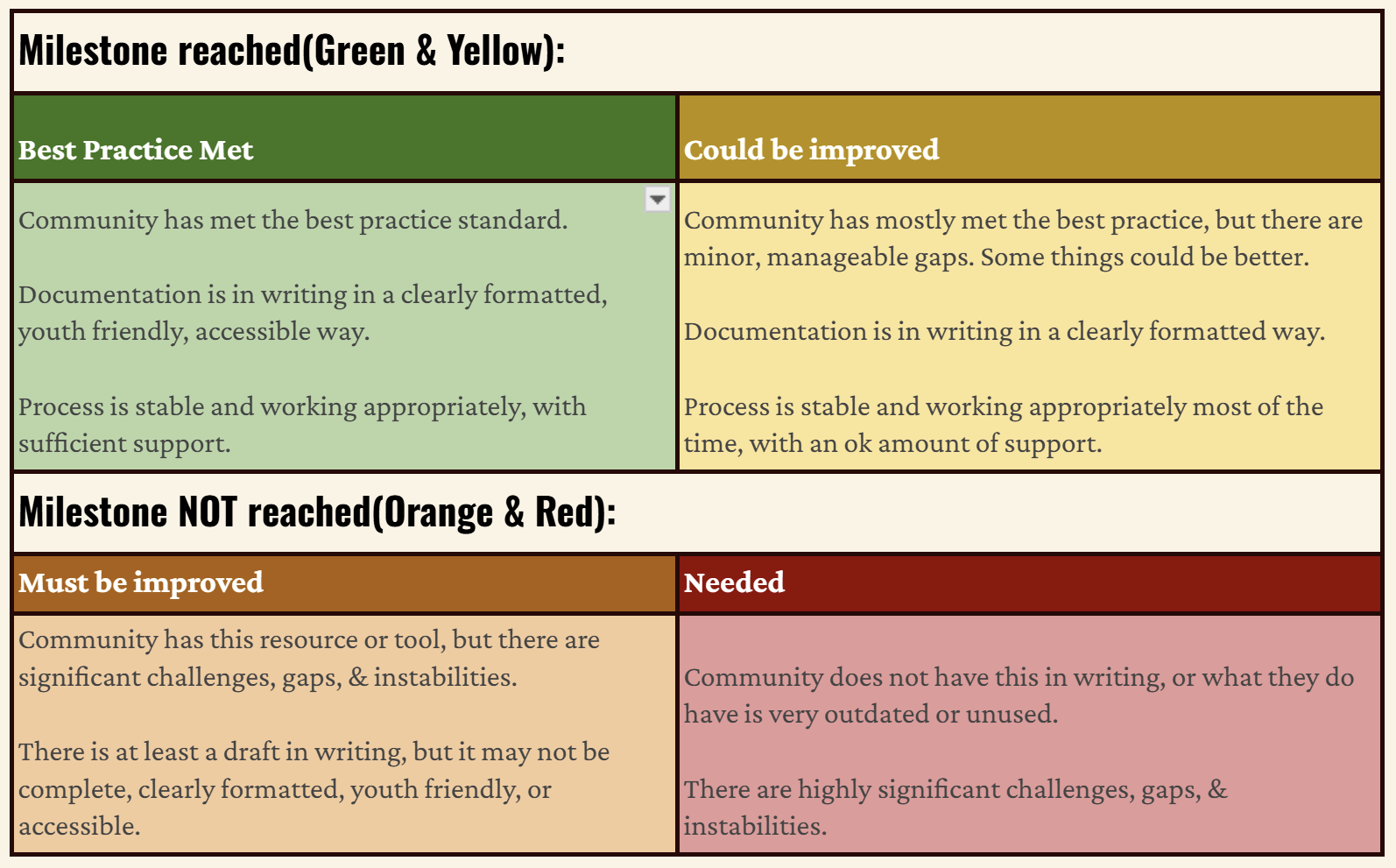
THE THREE PHASES
The milestone guide is broken up into three phases. Each phase builds upon the last, starting with the foundations and ending with the YAB being engrained in projects in the community. The milestones do not always need to happen chronologically - but it’s best when they do happen in order to create the most stable foundation.
Phase One: Foundations and Guardrails
To set up for long term success the YABs Host and the CoC needs to set some of the foundation and guardrails in place for a YAB, some of which need to be established before involving young people. In Phase One the bones of the YABs structure and support system are built, but not set in stone. Things can always be changed later on.
Milestones in phase one include:
Capacity Mapping
Support Staff
Funding
Budget & Fiscal Management
Compensation
Purpose
Roles, Rights, & Responsibilities
Phase Two: Identity and Roots
This phase is all about the YAB finding its own identity, growing its roots in the community, and finding balance. This phase can test the limits of the partnerships between the YAB, CoC, and community partners in ways that help the community grow and change the way it does business.
Milestones in phase two include:
Outreach Strategy
Engagement
Accessibility supports
Mission, Vision, and Values
Group Agreements, Conflict Resolution, and Accountability
Voting Structure
Partnership agreement
Phase Three: Established and Connected
In the final stage, the YAB is established, and has everything it needs to remain stable for the foreseeable future. The YAB is engrained in the community and in local government, working on projects with partners, as well as setting its own goals. There are clear processes in place for revisiting previous phases and refining the YABs structure as needed.
Milestones in phase three include:
Representation
Professional Development
Goals & Projects
An important note: When communities dive (or get thrown) head first into creating a YAB, it can be easy to unknowingly skip steps and not hit all the milestones. If the community and YAB are struggling and are not sure why, it can be helpful to return to the previous phases to see what might be out of whack - even if things *feel* established already. It’s possible that the root of the problem is in an earlier structural flaw even if the problem seems to be in a current dynamic or project the YAB is working on.
USING THE MARKER TOOL
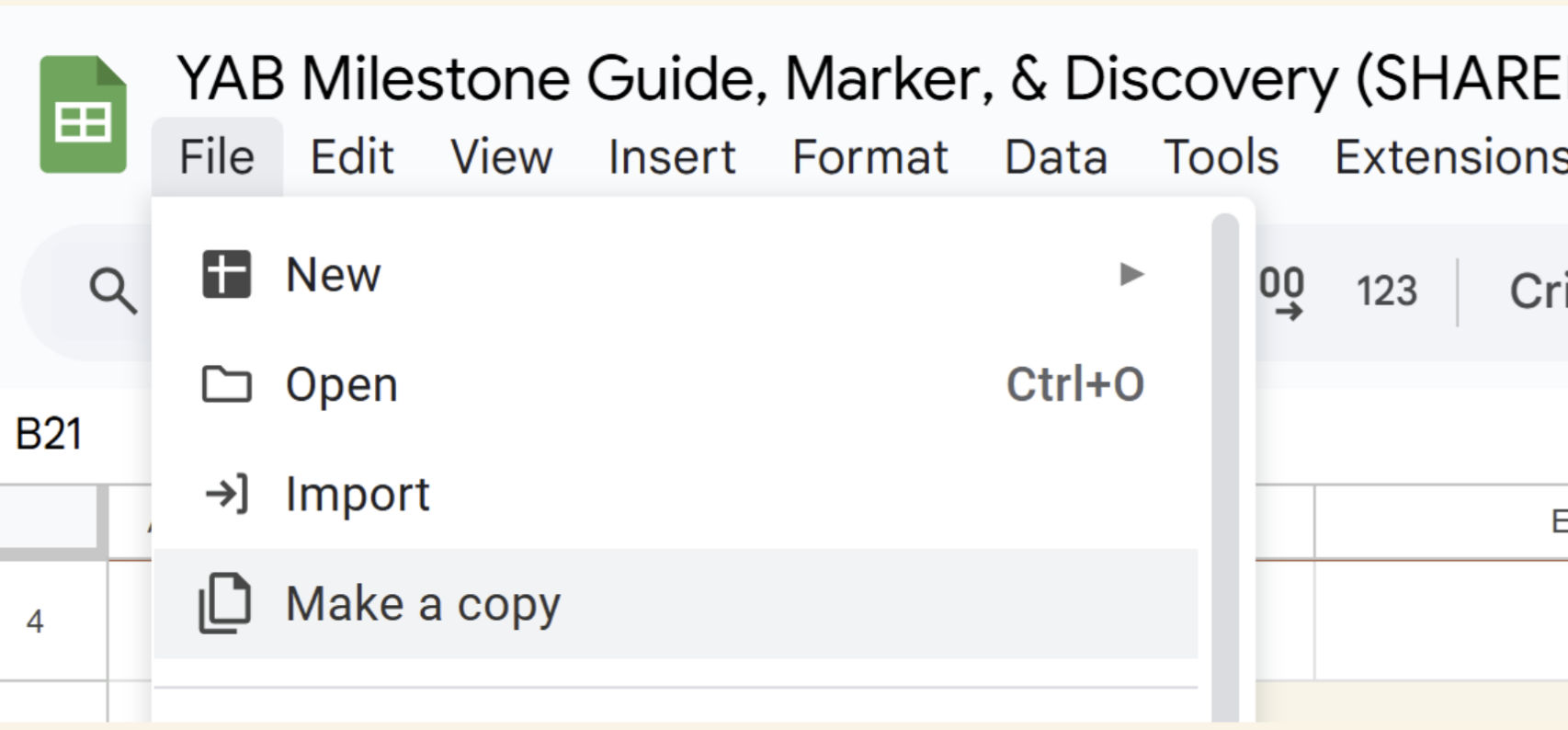
Start by making your own copy to track your YABs progress. Click this copy shortcut link or open the original Milestone Guide document, click “file,” and then “Make a copy.”
Make sure you rename your copy with your communities name, and you save your copy to somewhere you can find it.
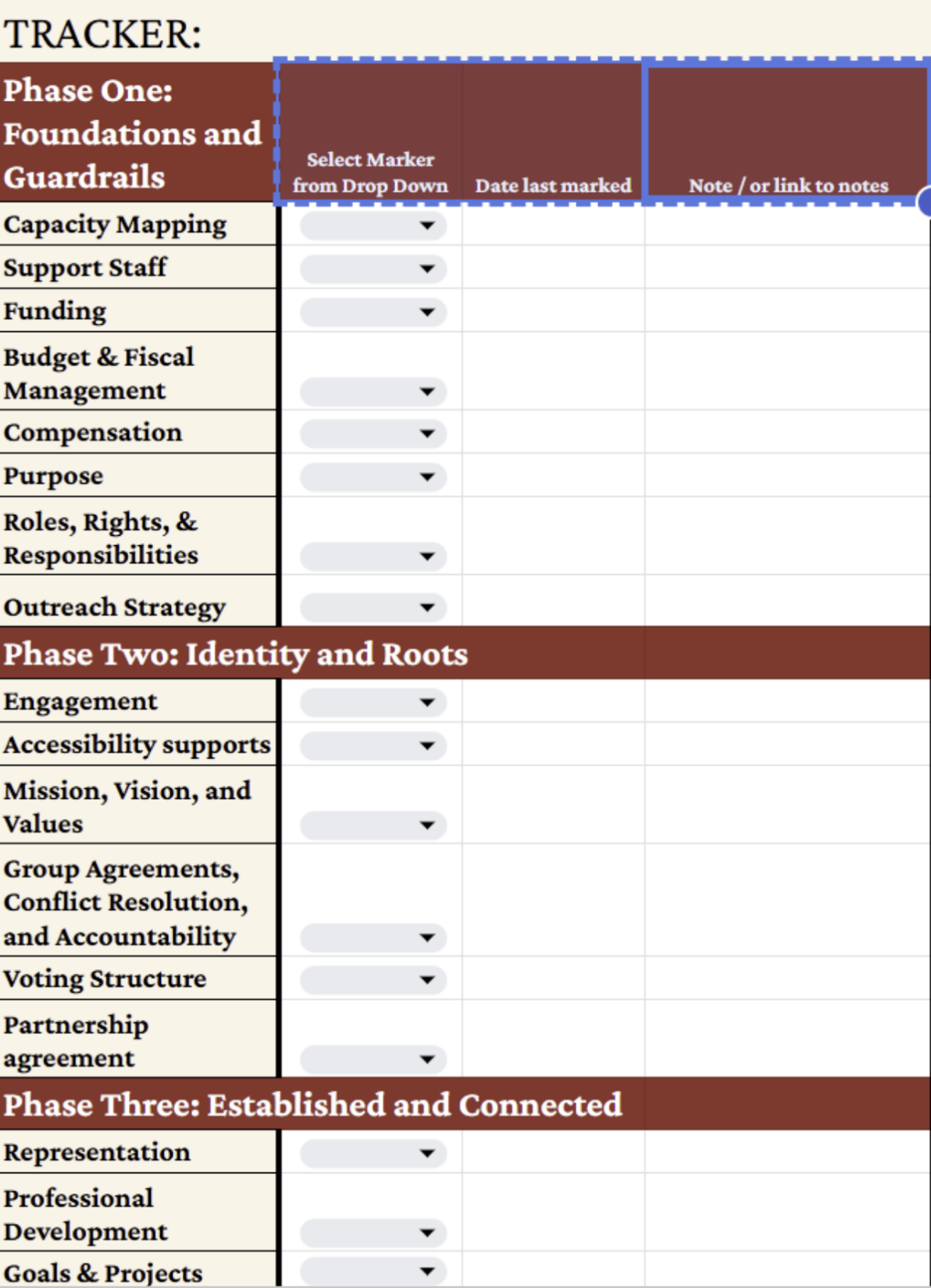
2. On the second tab of the spreadsheet, you will find the Marker Tool. The marker tool contains a drop down list to mark your progress towards “best practice met” for each of the milestones.
3. Each time progress is updated, update the “date last marked” column so you can see your progress moving forward.
4. Revisit previous milestones & phases as often as you need. A successful YAB stays resilient because it remains flexible enough to change, and structured enough to hold it together. You got this!
