

Choosing an Appropriate Compensation Model
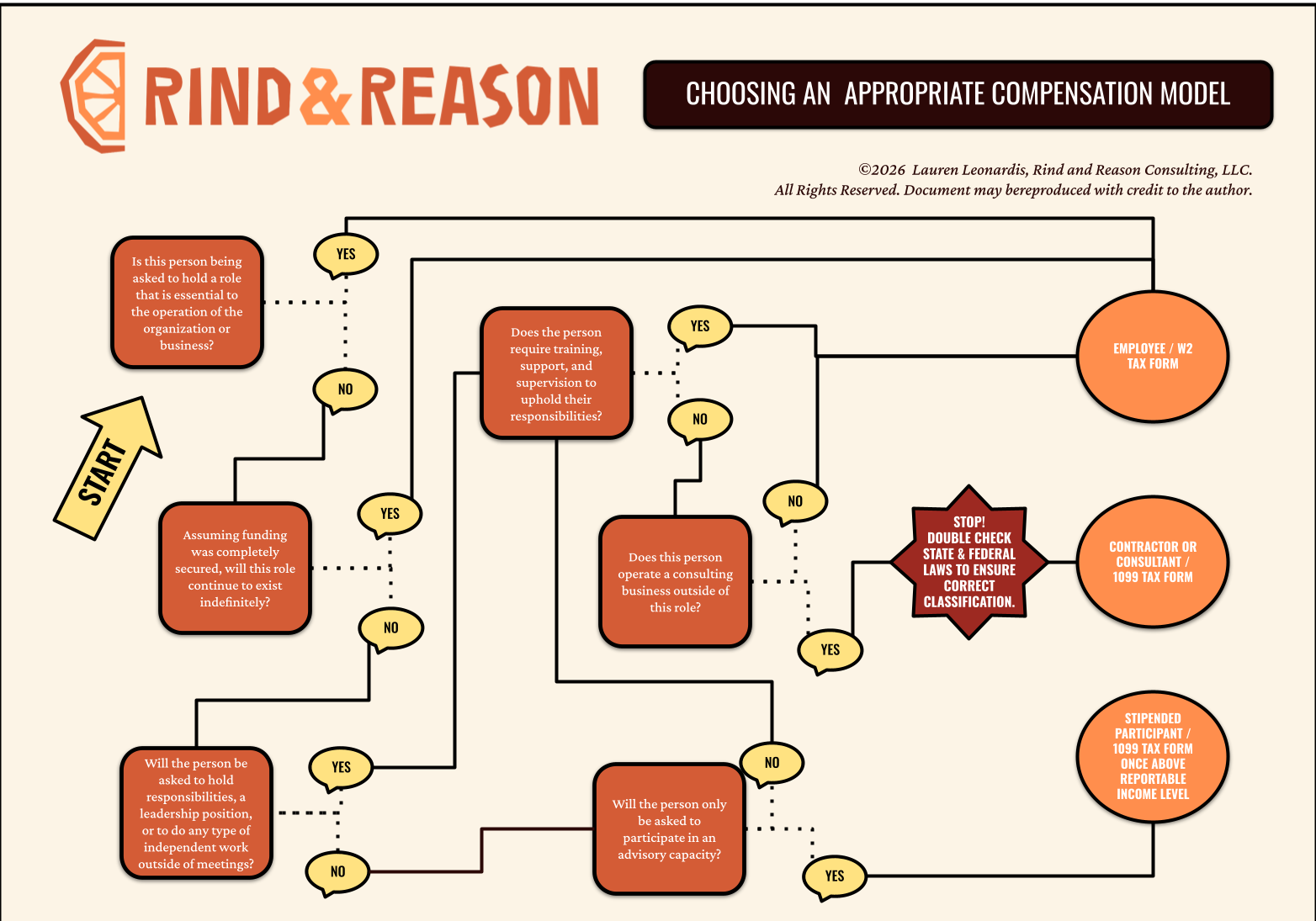
Determining appropriate compensation is often one of the most challenging and most impactful components of a new organization, project, or board; and while these guidelines apply to everyone in every role, they are particularly difficult when trying to involve people with lived experience.
The flowchart below was created to provide some initial guidance, but each hiring agency must determine what approach best aligns with their goals, local context, and legal requirements. Consulting legal counsel and reviewing local, state, and federal regulations is strongly encouraged, because even the most well-intentioned compensation practices can expose people to financial or legal risk if not structured appropriately.
Numerous additional resources are available to support in making informed decisions about compensation, including guidance from the Internal Revenue Service (IRS), the U.S. Department of Labor, and state labor agencies. (see some links at the bottom)
LEARNING FROM YOUTH ACTION BOARDS:
A COMPENSATION HISTORY LESSON
When YABs first started to pop up across the country, the A in YAB stood for “advisory” not “action” as we know it today. A classic advisory group model doesn't do the work, they provide advice. That meant it was seen as appropriate to pay them with a stipend and pizza.
Time went on, and we learned that asking people for their advice without involving them more in the decision making was not authentic engagement. So more and more, YAB members were asked to get involved in the work, to hold leadership positions, to get their hands in it. Without (initially) changing the way they were being paid.
Communities started to realize they triggered a taxable amount of income, and that now YAB members were receiving a 1099. However - the rate that youth were being paid did not significantly increase despite the tax impacts. Some communities started calling YAB members “consultants”, despite not having consulting experience or background, and still needing a lot of support to be involved in the work.
Today - many communities are still caught up in trying to find their way through figuring out the right compensation for them, but it’s amidst a sea of examples from the past. Many more communities are now moving to ensure young people are on payroll and receiving a w2, others are setting up the YAB as consultants with consulting rates, and others are returning to a strictly advisory board model due to the recognition that they don't have the capacity to provide more than that. Each board host needs to decide what works best for them, with the caveat that most young people do not meet the legal definitions of contract workers so it’s especially important to triple check.
ADDITIONAL Compensation Resources
U.S. Department of Labor - Myths About Misclassification:
https://www.dol.gov/agencies/whd/flsa/misclassification/myths/detail
IRS - Guidelines on Employees vs Independent Contractors:
https://www.irs.gov/newsroom/worker-classification-101-employee-or-independent-contractor
https://www.irs.gov/businesses/small-businesses-self-employed/independent-contractor-self-employed-or-employee
National Homeless Law Center - Youth Compensation Legal Guide:
https://docs.google.com/document/d/1iB2zBolH8u6EVksNDrTdNzwmfydOUfKY/edit?usp=sharing&ouid=117561279739302756614&rtpof=true&sd=true
